Men's Undyed Cashmere Cable-Knit Sweater - Atlas
Worn through a decade of winters, about $0.54 a wear — direct from the artisans of Upper Mustang, with no luxury-label markup.


Size guide & measurements
Approximate finished measurements in inches, garment laid flat and unstretched, measured straight across and not doubled. Every piece is hand-knitted, so individual garments vary a little.
- AShoulder — across the back, outer seam to outer seam
- BBust — flat, one inch below the armhole
- CArm length — shoulder seam to cuff edge
- DBody length — highest shoulder point to hem
| Size | A · Shoulder | B · Bust | C · Arm | D · Length |
|---|---|---|---|---|
| XXS | 15½" | 17¼" | 22½" | 24" |
| XS | 16¼" | 18¼" | 23¼" | 25" |
| S | 17" | 19¾" | 24" | 26" |
| M | 18" | 21¼" | 25" | 27" |
| L | 19" | 23" | 25¾" | 28" |
| XL | 20" | 25" | 26½" | 29" |
| XXL | 21" | 27" | 27¼" | 30" |
Couldn't load pickup availability
All duties & customs covered · Free 30-day returns, both ways

~420g
1 Chyangra goat =
~150g per year
Each sweater uses the entire yearly cashmere of ~2.8 Chyangra goats

Ply Count: 2 Ply
Higher ply = denser, warmer, more durable

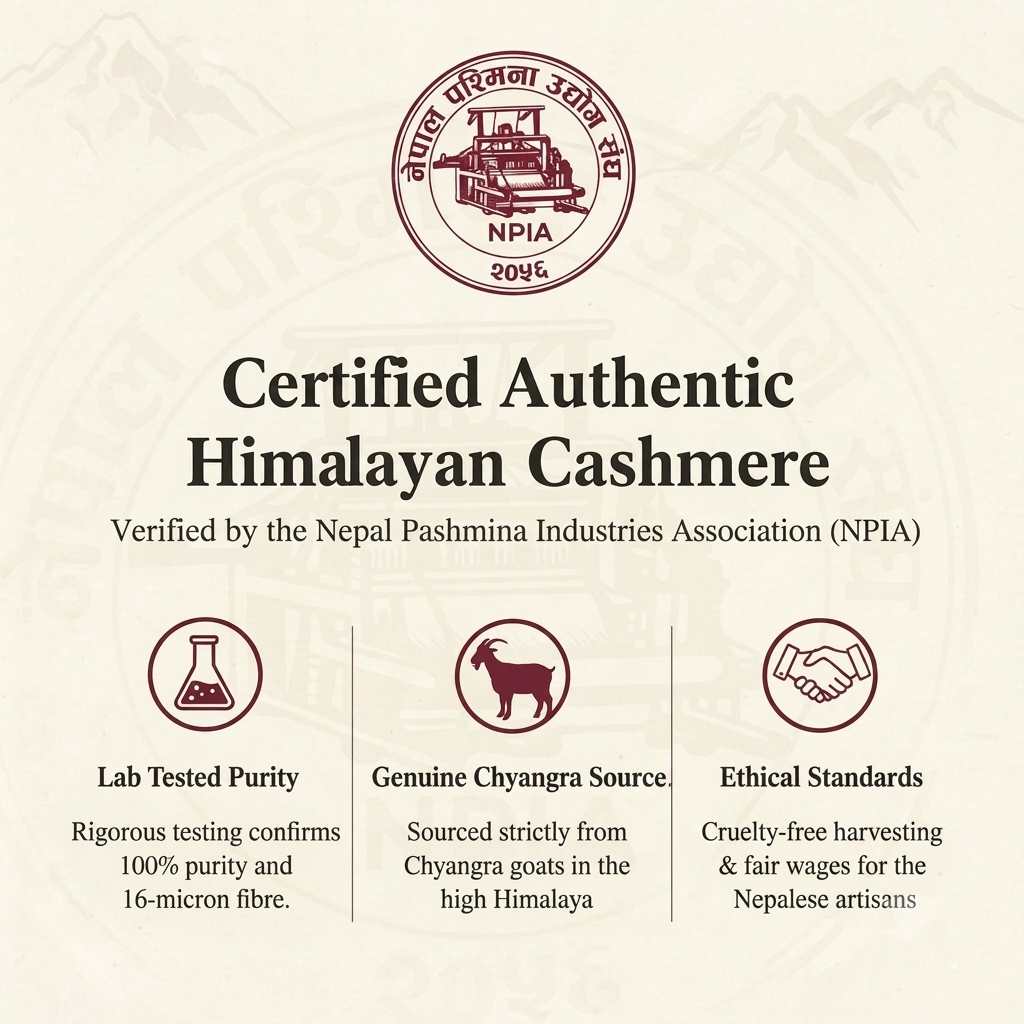
Micron: 14-16µm
Gauge: 12
Cashmere Ultra-fine, Grade-A fibers
Description
Description
A cable-knit crewneck in 100% undyed Himalayan cashmere, hand-combed from Chyangra goats in Mustang and hand-knitted by artisans in Nepal. The Atlas, left in the fibre's own colour.
The cable pattern is the hardest place to hide a bad yarn.
So we took the dye away too.
Undyed, and why that matters here.
Dye is where weak cashmere disappears — a blend, a coarse fibre, a patched-up yarn all vanish under colour. A cable knit is already an honest structure: every twist puts the yarn on display. Leave it undyed as well and there is nothing between you and the fibre. What you see is the fleece as the goat grew it.
The hand-knitted cable.
The twisted-rope cable is knitted by hand in Kathmandu, not machine-pressed. The pattern is not only decoration — it adds structure through the chest and shoulders, and gives the piece the density and heft that thin machine knits never have.
Five natural shades.
Light, mid and dark grey melange, oatmeal, and toast — all of them colours the herd actually grows. Natural fibre varies a little between batches, and slight variation within a single sweater is normal. That variation is the evidence there was never any dye.
Care.
Hand-wash cool with a little cashmere shampoo, or dry-clean. Press the water out without wringing and dry flat, never on a hanger. Rest it a day between wears and store it folded.
Questions
How does it fit?
True to size, cut to pull on over the head. The cable gives it substance rather than bulk — if you are between sizes, size up for room over a shirt.
Will it pill?
Light pilling at friction points is normal on any hand-knitted cashmere in the first few wears. A cashmere comb lifts it away and it settles down.
Do you make the Atlas in colours?
Yes — the dyed Atlas comes in nine shades. More undyed pieces are in our undyed men's line.
Will I pay customs on delivery?
No. Every order ships DDP, so duties are prepaid at checkout. Nothing is collected at the door.
Who it’s for
The Atlas cable for someone who wants the fibre left in its natural colour. Same heavy hand-knit construction, in the shades the fleece arrived in, from the undyed line rather than the dyed range.
When to use it
- The same hard winter wear as the dyed Atlas
- Wardrobes built on natural and undyed pieces
- Anyone who has reacted to dyed wool against the skin
- Weight: Refined ~420 grams
The ~420g weight strikes the perfect balance between substantial warmth and effortless wearability—luxurious enough for special occasions yet comfortable for everyday elegance. - Softness: Ultra-fine 16-micron fibers
16-micron fibers are exceptionally rare and luxurious, creating an incomparably soft, gentle embrace against your skin (for comparison, human hair is about 75 microns).
Perfect for: Transitional seasons, office wear, dinner gatherings, and layering with style. Ideal for those who refuse to compromise between sophistication and comfort, seeking a sweater that feels as extraordinary as it looks.
Returns & Exchanges
Returns & Exchanges
30 Days to Decide
Cashmere is meant to be felt, not guessed at through a screen. Receive your piece, hold it against your skin, see it in your own light. If it isn't everything you hoped, you have 30 days to return it. Quality issues, wrong items, and colour mismatches are always covered by us at no cost. For sizing or colour-variation returns, we issue full store credit, with a free prepaid label if you're in the US.
Care Instruction
Care Instruction
All Lumusae garments are of the highest quality and with good care will last for years to come. To read our care guide please click here
Cashmere is a fine animal hair, not a hard-wearing wool. It responds to cool water and gentle handling, and almost all damage comes from heat and agitation rather than from wearing it. Treated properly, a piece lasts years rather than seasons.
-
 Machine Wash
-
 Dry Clean
-
 Do Not Bleach
-
 Lay Flat to Dry
How do I wash cashmere?
By hand is best. Fill a basin with cool water — no warmer than about 30°C / 86°F — and add a capful of a mild wool or cashmere detergent. Submerge the piece and press it gently under the water for two or three minutes. Do not rub, wring or twist. Rinse in cool water of the same temperature until the water runs clear.
By machine, only if the cycle is genuinely gentle. A wool or delicate cycle works if it stays cool and spins slowly. Turn the piece inside out, put it in a mesh laundry bag, and use a low or no spin setting.
The one thing to avoid is thermal shock. Hot water, a sudden change in temperature, or vigorous agitation causes the fibres to lock together permanently. That is felting, and it cannot be reversed. For the same reason, skip bleach, fabric softener and the tumble dryer.
How do I dry cashmere?
Press the water out between two towels rather than wringing. Reshape the piece while it is damp, then lay it flat on a dry towel away from radiators, direct heat and strong sunlight. Never hang a wet knit — the weight of the water pulls the shoulders and body out of shape as it dries.
Why is my cashmere pilling, and how do I fix it?
Pilling is friction, not a fault or a sign of poor quality. It appears wherever the garment rubs against something — under the arms, along a seatbelt, where a bag strap sits. It is most noticeable in the first few wears and settles down after that.
Lay the piece flat and remove pills with a cashmere comb, working lightly in one direction and letting the comb do the work. Do not pull them off by hand, which drags the surrounding fibres.
Avoid battery fabric shavers. They cut into the surface and thin the knit over time. A comb lifts the pills off; a shaver removes fibre you cannot put back.
How should I store cashmere?
Never hang it — hanging stretches the shoulders over time. Whether you fold or roll depends on how the piece is made.
- Knitwear — fold. Sweaters, cardigans, hoodies, joggers and polos. Fold along the existing seams and stack loosely.
- Woven pieces — roll. Shawls, wraps, ponchos and capes. A fold leaves a permanent crease along the fold line, so roll them loosely instead, with acid-free tissue if you have it.
- Beanies, headbands, socks and gloves — store flat. They keep their shape far better flat than stuffed into a pocket or a drawer corner.
Always store it clean. Moths are drawn to skin oils, perspiration and food traces rather than to the fibre itself, so a piece put away unwashed is far more vulnerable than a clean one. Use a breathable cotton bag with cedar or lavender, and avoid airtight plastic, which traps moisture.
Do I need to wash it after every wear?
No, and you shouldn't. Cashmere benefits from resting between wears — give it a day to recover its shape. Airing it usually does more than washing, and a small mark is better spot-cleaned than put through a full wash.
Is dry cleaning safe?
Yes, and it is a good option for structured pieces or stubborn marks. Choose a cleaner who handles cashmere regularly. Most pieces do not need it often; hand washing at home is gentler and perfectly adequate for routine care.
Care for shawls and wraps
Handwoven shawls are finer than knitwear and prefer hand washing. Do not iron directly on the fabric — if a piece needs pressing, use a cool iron under a cloth, or hang it in a steamy bathroom and let the creases drop out. Fringes can be combed straight with your fingers while damp.
For a longer walkthrough, including stain removal and seasonal storage, read our complete guide to caring for cashmere. If you are unsure about a particular piece, contact us and we will advise.